
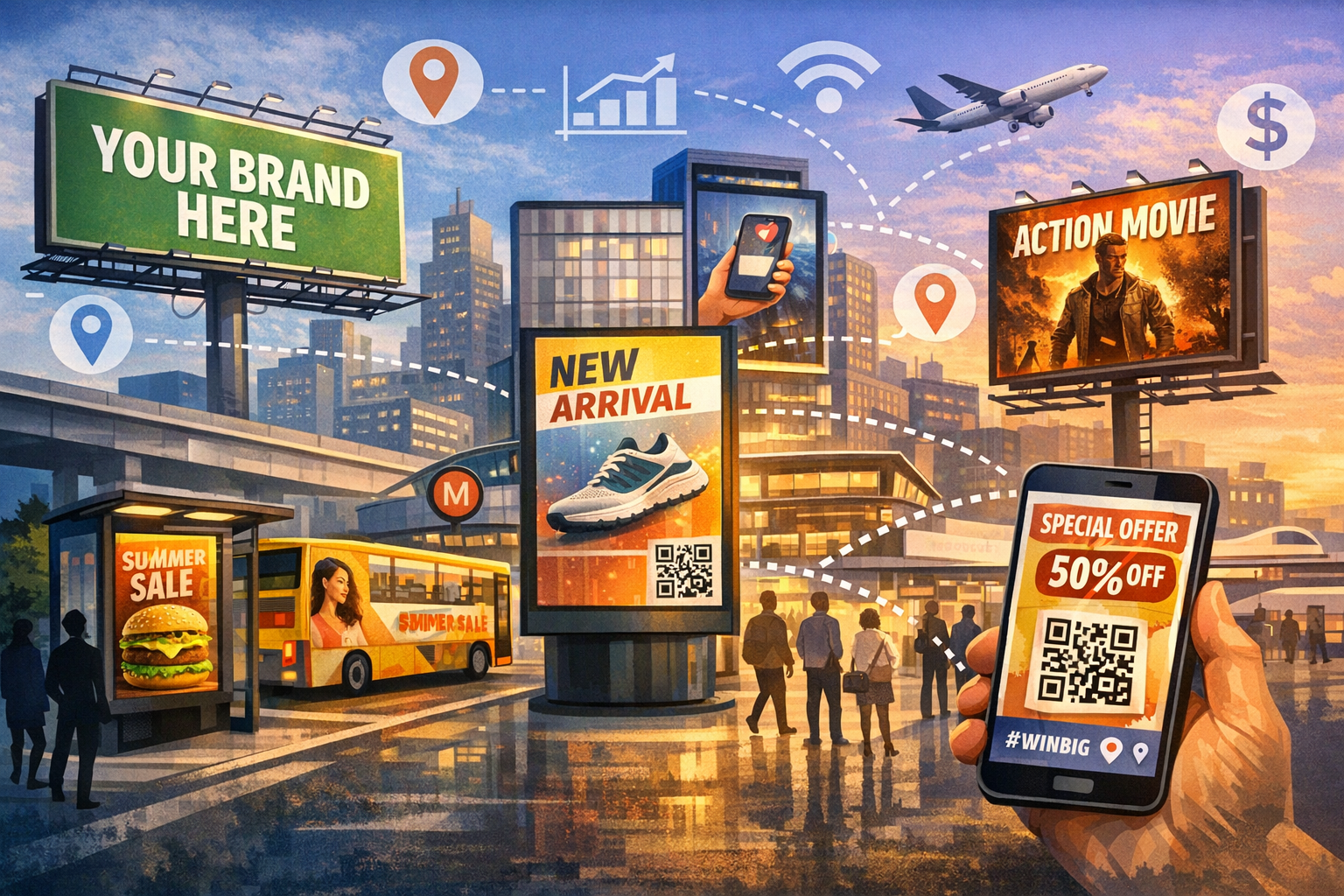
OOH stands for Out-of-Home advertising; it refers to any advertising that reaches people while they are outside of their homes. Unlike digital ads that appear on screens you actively engage with, OOH advertising is encountered passively as part of everyday life.
Common examples include billboards, transit ads, bus shelters, street furniture, posters, and digital screens in public spaces such as malls, airports, and elevators.
At its core, OOH advertising is about visibility, repetition, and geographic relevance.
Why OOH Advertising Still Matters
Despite the rise of digital and social media, OOH remains one of the most effective awareness channels. It works because it is:
Hard to ignore; you cannot scroll past a billboard
Brand-safe; no questionable content adjacency
High reach; ideal for mass exposure in defined markets
Reinforcing; strengthens recall when paired with digital campaigns
OOH is particularly strong for local businesses, real estate, retail, entertainment, and brand launches.
Key Types of OOH Advertising
Billboards
Traditional large-format roadside placements designed for fast, high-impact messaging. Best for brand awareness, promotions, and directional messaging.
Transit Advertising
Includes buses, subways, trains, and station takeovers. Highly effective in urban areas with predictable commuter patterns.
Street Furniture
Bus shelters, benches, kiosks, and bike racks. These offer closer viewing distances and longer dwell times.
Place-Based Media
Screens or displays in specific environments such as gyms, malls, elevators, airports, and movie theatres. Useful for targeting specific demographics.
Digital OOH (DOOH)
Digital screens that allow for dynamic content, day-parting, and multiple creatives. Increasingly popular due to flexibility and measurement improvements.
Effective OOH Advertising Strategies
Keep the Message Simple
OOH is consumed quickly; most viewers have only a few seconds. Aim for:
One clear message
Five to seven words when possible
Large, legible typography
If it cannot be understood in three seconds, it is too complex.
Design for Distance
Creative must account for viewing speed and distance. High contrast, minimal text, and bold visuals outperform detailed designs every time.
Choose Locations Strategically
Placement matters more than format. Consider:
Traffic patterns and dwell time
Proximity to point of sale
Audience relevance by neighbourhood
A smaller billboard in the right location often outperforms a larger one in the wrong place.
Integrate With Digital
OOH works best as part of an integrated campaign. Common pairings include:
QR codes leading to landing pages
Social hashtags to encourage engagement
Retargeting mobile ads within a geographic radius
This bridges offline awareness with online action.
Use Frequency, Not Just Reach
Repeated exposure builds familiarity and trust. A campaign seen multiple times in the same market often outperforms one with broader but shallow reach.
Measuring OOH Effectiveness
Modern OOH is increasingly measurable through:
Mobile location data and impression estimates
Lift studies for brand awareness and search activity
Website traffic spikes by geography
Promo codes or dedicated URLs
While OOH is not a direct-response channel by nature, it plays a critical role at the top and middle of the funnel.
Final Thoughts
OOH advertising is not about instant clicks; it is about presence, credibility, and memorability. When executed well and aligned with digital efforts, it becomes a powerful driver of brand recognition and long-term growth.